What is Religious Authoritarian Parenting?

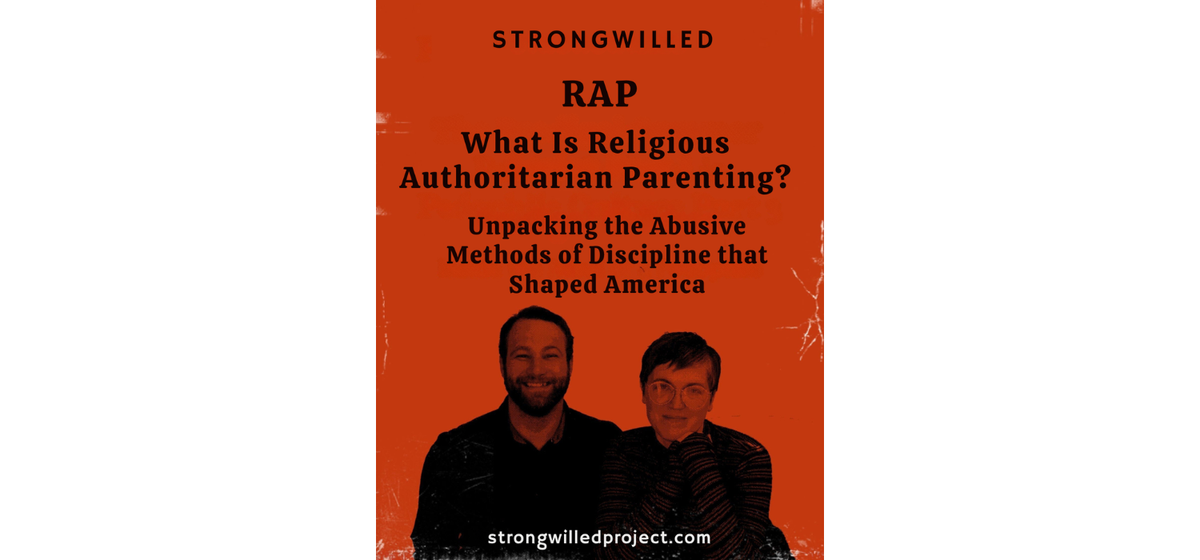
Two years ago, we launched the STRONGWILLED project as a way to have conversations centered on the long-term impacts of Christian nationalist parenting methods on both individuals and society at large. In the past two years, the efforts of Christian fascism towards controlling, oppressing, and punishing the disobedient in society have only accelerated. And so, too, has the need to identify, process, and continue talking about the harms of these methods as we learn to heal and work towards a better world for us all.
We believe that while American Christianity is a kaleidoscope quilt of a variety of denominations and cultural backgrounds, there is a common factor in almost every patriarchal American conservative church: the ways that people in these communities parent their children. Instead of looking for the common denominators in theology or even politics, we believe that the true hallmark of a Christian nationalist is revealed in how they discipline and control their children. Parenting methods from patriarchal hierarchical Christians of all backgrounds have been remarkably consistent over the past 5 decades in the United States.
But what were these methods in a nutshell?
Before we look at the parenting methods, it’s important to recognize that the peddlers of these forms of discipline were keenly focused on the ideological underpinnings of raising children to immediately obey authority. We coined the term Religious Authoritarian Parenting (RAP) methods to distill these practices into their ideological purpose: these methods utilized authoritarian methods of parental control with the added element of making it a religious ritual. And the more parents performed these rituals, the more deeply embedded they became within the cult — making it a significant way patriarchal Christianity keeps people in the fold.
Religious Authoritarian Parenting is an approach to childrearing that prioritizes conformity to the group and obedience to authority over all other aspects of childhood development, utilizing religion as further confirmation of the role humans play in submitting to authority. The goal is to raise children who grow into adults who automatically submit to any authority that their parents or leaders consider to be God-ordained.
Parenting practices revolve around conditioning a child to submit to authority, with a myriad of consequences if the child does not obey immediately. The consequences mostly center around inflicting physical pain utilizing corporal punishment. While the specifics vary, the most common advice given to parents is that starting in late infancy to early toddlerhood, spanking must be utilized against the child every time they assert their will in defiance of the parents.
While James Dobson and others promoted a more ritualized form of spanking for older children (including forcing the children to hug their parents at the end of the ritual) for toddlers and younger children it was assumed creating pain would be enough of a detriment. While the RAP experts told their listeners that if spanking was done in a calm manner it would have no ill impacts on the children, the research shows otherwise [1]. It also shows that in homes where parents believed they only were spanking in a calm manner, they were actually prone to hit their children in anger much more than they self-reported [2]. Other forms of corporal punishment utilized included slapping the hands of infants (known as blanket training) or squeezing the trapezoid muscle of a child in order to discreetly inflict pain while in public.
While these might sound simply like the parenting methods of emotionally immature people who do not know how to communicate (and therefore resort to violence against defenseless children), the RAP movement took it a step farther and tied these damaging methods to devotion to Christianity. If parents did not hurt their children every time they asserted their will then they were disobeying God himself — and sending America hurtling into the communist, feminist, non-White led future. In order for the United States to honor God, the strong inner will of children must be targeted at every turn — and crushed into compliance in order for the capitalistic white supremacist patriarchy to continue on.
Without the religious elements underpinning these methods, it is likely they would not have become so popular and shaped American society to such a wide degree. In Christian churches, schools, and homes across the United States, these parenting methods were not only utilized constantly, but people in these communities were pressured into using them. If your child did not obey you immediately, the entire community would notice and even admonish you. An entire economic and social ecosystem was built — through books, workshops, seminars, and curriculums — designed to normalize these abusive methods and pressure parents to utilize them. All of this happened over the past half-century, thanks to the boom of Christian publishing and the patriarchal conservative backlash movement. It happened in a time where the scientific consensus was clear that corporal punishment had negative and violent implications for individuals and society as a whole.
And who has paid the price? As always, it has been the children who absorbed the weight of these punishing methods into their very bones.
The goal of religious authoritarian parenting is to prevent the development of self-autonomy or individuality from happening — ever. It’s based on the idea that humans, no matter their age, are untrustworthy and evil and require dominance by a deity or authority figure. This style of parenting is designed to prime a child to stay within the religious community, to submit to the hierarchy of that system, to obey the norms of the community, and to continue on in those values and political identities for life. These are all values that authoritarian leaders throughout history not only love, but they are also values that they can exploit for their own personal, financial, and political gain.
For those of us raised with these RAP methods, we know intimately that parenting has always been political. So when you find yourself in a mess as big as the one Trump and MAGA have fueled in the United States and beyond, it’s important to take the time to look at the variety of factors that got us here.
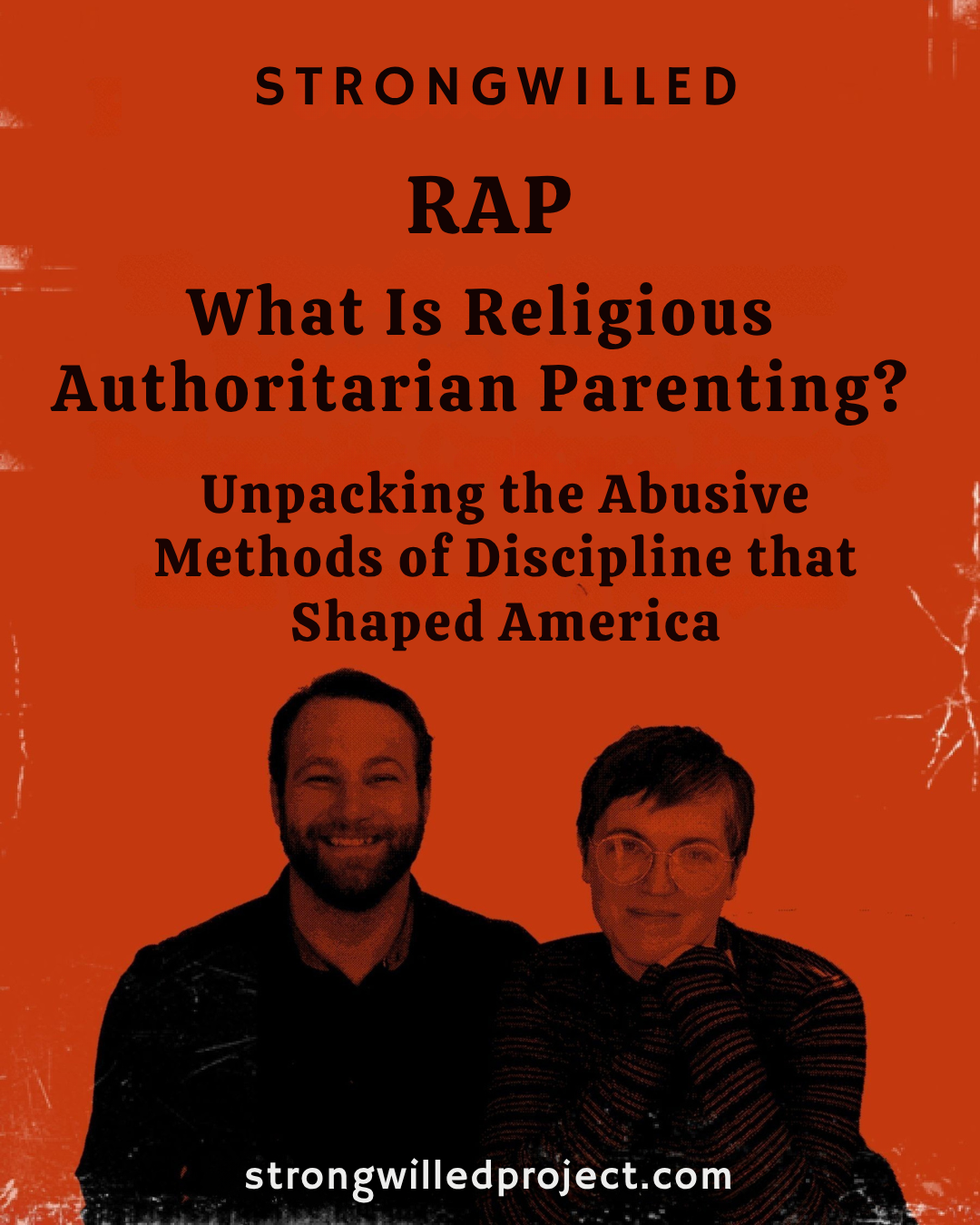
Thank you to everyone who has supported our project from the beginning — and hello to all the people who are new here!
We will keep unpacking our most popular content over the next few months but as a reminder, we have all 16 chapters of our STRONGWILLED book free and available to read here on our website. We also have two years worth of podcast content (all ad-free) on these topics – and you can find the STRONGWILLED podcast wherever you normally get your audio content.
For our Patreon and paid subscribers, we are currently deep diving into the developmental stages and how RAP methods impact people as developmental trauma in our Growing Up in the Fold series. We have published our podcasts on infancy and corporal punishment, with toddlerhood coming up soon. On the main podcast feed this summer we are talking about enmeshement, estrangement, and what it means to be the prodigal child in RAP families – and we are already hearing from so many people that this topic is relevant to their own situation.
We know it is a tough time right now for everyone healing from authoritarian control in their childhoods, and we stand in solidarity with all the survivors.
Thank you for being here – and please know that you are not alone.
Listen to our podcast series on developmental trauma here:
Notes:
[1] Gershoff ET, Grogan-Kaylor A. Spanking and child outcomes: Old controversies and new meta-analyses. J Fam Psychol. 2016 Jun;30(4):453-69
[2] Foley, D. (2015, April 14). The Discipline Wars. TIME.com. Retrieved September 15, 2024, from https://time.com/the-discipline-wars-2/ ↩