Jenai Auman and Being on the Lookout for Power and Control Dynamics
Welcome to STRONGWILLED, the multimedia project aimed at helping survivors of religious authoritarian parenting methods develop autonomy and find solidarity.
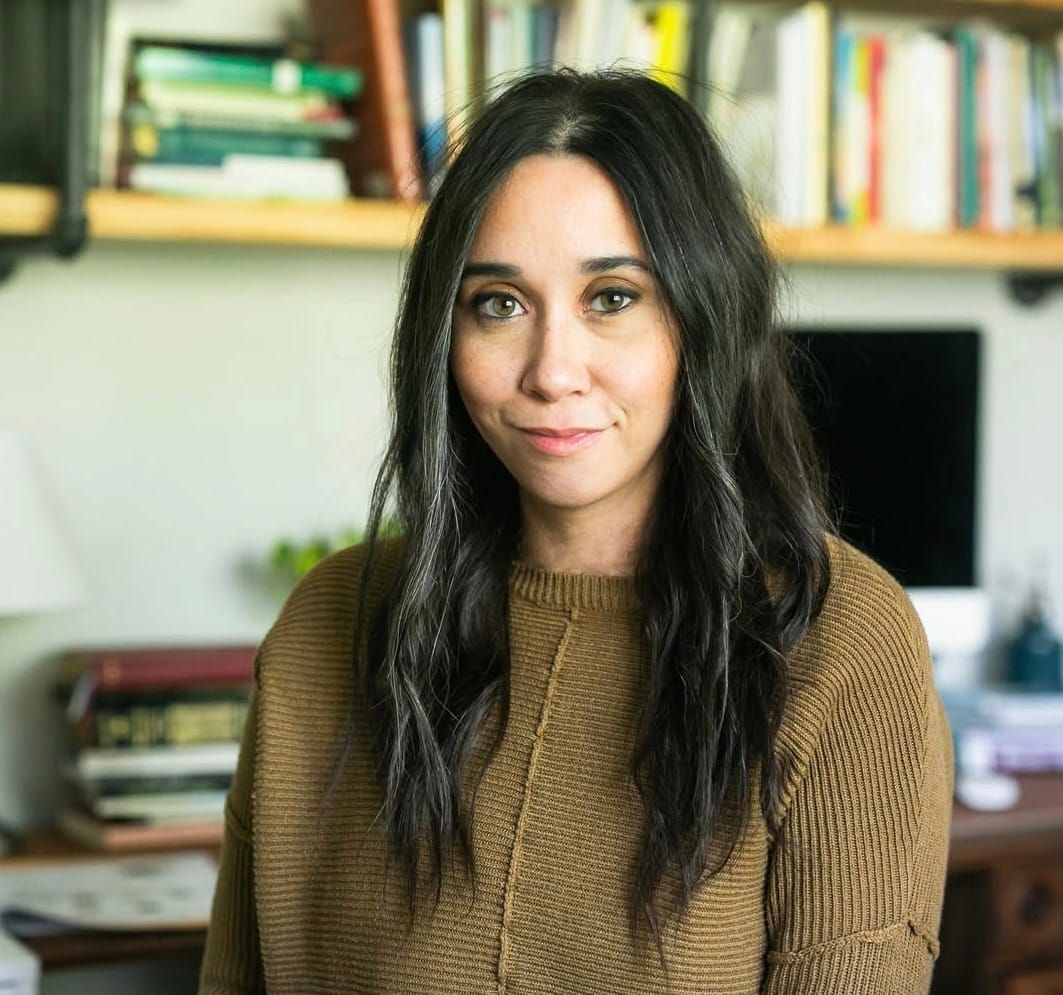
I loved this conversation with Jenai Auman about learning to spot power and abuse dynamics in any group or organization.
She is author of Othered, and writes regularly on her substack. She also serves on the board of The Reclamation Collective. You can also follow her on instagram.
You can listen here or find STRONGWILLED wherever you normally get your podcasts.
Krispin and Jenai talked about the Spiritual Power Inventory which you can find on The Reclamation Collective website. They also discussed whether progressive spaces are more or less susceptible to abusive dynamics, and rhetoric used to dismiss progressive movements.
As always, this is a survivor-led and survivor-supported publication. If you appreciate our work (and our ad-free podcast!) please consider supporting us financially or sharing about the podcast on your social media channels.
TRANSCRIPT
(transcript has been lightly edited for clarity)
Jenai
Krispin: Welcome to the Strong-Willed Podcast. Today I am here with Jenai Auman. She is the author of Othered. She is a theologian….I don't know if that's what you call yourself.
Jenai: I don't know who's gatekeeping the term, but I, I accept it.
Krispin: Yeah, totally. I totally see you as a theologian.
She is the author of Othered, where she explores power dynamics and marginalization in her experience in White Evangelical church as a Filipino American woman. She's also on the board of the Reclamation Collective and organization that supports survivors of religious trauma. And today we're gonna be talking about power dynamics in groups, in high control groups, in progressive groups. For a lot of our listeners, they've left an authoritarian group like white Evangelicalism in search of healthier communities. And then periodically we find out that some of these same dynamics end up getting played out usually by leaders in these new communities. And so thought it would be great to talk to Jenai today about. How do we understand these dynamics?
How do we create healthier communities? And how do, how can you be on the lookout for what might be like an unhealthy community that's sort of promising, um, something healthier. So we're gonna be talking through these dynamics. It's gonna be a pretty casual conversation, just. Talking about power dynamics.
Yeah. But I wanted to start by asking you, when did you start thinking in terms of systems and power dynamics?
Jenai: Yeah, and I would say even number one, I love how you, because you read and you, and you endorsed Othered, and so it's always very interesting when someone reads it and then they give you a summary of the book back to you, and then as an author, you kind of.
Have, and whether you say something or not to the person is kind of like up to you, but it's like an interesting experience. Like, oh, did I do the thing that I set out to do And. It's so funny, some folks would read it and they would not say what you said. You actually captured some pivotal points that I thought was very important in the discussion on spiritual abuse because, especially the bit on marginalization, um, because I think in a lot of the spiritual abuse literature that I was reading, it didn't necessarily speak to marginalization and then by kind of default, it continued to marginalize marginalized populations in the conversation.. And not include their perspective. So I, number one, I just wanna say thank you for identifying that.. I think I, it took a while for me, if I'm being totally candid and honest, I, I didn't see American Christianity as a whole system that might have viruses until maybe some time after my experience with my former church. Now, in regard to the former church that I had left, I would say there was one main perpetrator who perpetuated most of the spiritual abuse. But in that instance I did, and I was able to name and acknowledge that he was only able to do so because there was a system and a group of people that enabled him to continue on and on and on.
So I think I had a grasp of. This is just not, you know, and for many folks who have engaged or encountered something like this, sometimes you feel like people are minimizing your pain as relational conflict that's happening between you and the past. And you need to work that out. You need to go to your brother, your sister, and blah, blah, blah.
When they ignore power dynamics, though, they don't see that it's actually unsafe for that particular person to go to their brother or sister and it, so I think acknowledging, like I did acknowledge that I was at the bottom rung of whatever important ladder we had in that system. Um, but then when I left that I thought, well.
And this is maybe petty of me, and you can laugh at this. I thought, well, I'll just join a new community and I'll find a new group of people and I'll thrive without them. And I did do that. But then I was also harmed in the survivor advocacy space, and I felt steamrolled also, and I felt love bombed also.
And some of those narcissistic characteristics that were prevalent in my former pastor I was also finding in the advocacy space. And so it took the secondary trauma of that experience for me to kind of slow down and realize spiritual abuse and religious trauma, they don't happen in a vacuum.
There's actually a shifting, they're shifting mechanisms and it, it made me take a sober step back and actually. Ask the question, what do I know or what don't I know that I need to know? Like there's something I'm missing.. And um, and I think the, the particular itch I had in my, like this, there was something in my brain that I needed to scratch.
And so that's kind of what I kept researching and diving into.
Krispin:. I love that. And well, I don't love that it comes from like this harmful personal experience, but um, it just makes me think about how, so often the things that we get really invested in and explore is coming from wanting to understand ourselves. And so I think just incredibly relevant to this conversation, right, where you were part of this clearly. Like authoritarian or hierarchical space and then moving into a space that claimed to have different values and the same dynamics playing out.
Jenai: Yeah. Well, and, and also like in researching, I don't know if anyone else feels that way in kind of researching the thing that I didn't understand. And that I felt was used against me. It almost felt a little bit like getting my power back in the ways that I'd been disempowered.. And like, you don't get to take this thing away from me. Not only do you not get to take it, like you don't get to make me feel small. I'm gonna learn the hell out of this thing. And like tell and get to a point where I'm gaslight proof, um, in my relationship to you anymore. Does that make sense?
Krispin: Yeah, totally. And I think that's such a good point because a lot of times folks will have this repeat of like, I feel like I was tricked again, or I was hurt again. And I really believe that.
You can't always guarantee that, but the more that you know and learn the dynamics. And see what's going on. Learn about power dynamics, how systems work, the better equipped you are to notice those things earlier. Um, and like you said, to empower yourself to make better de to empower yourself, to make decisions, um, for your own safety and maybe have some influence on the community as well.
Jenai: Yeah. I love that.
Krispin: One of the things that this narrative that I often hear is this like, you know, I left white Evangelicalism, or I left this like, high control group and then I went to a more progressive space, um, and was harmed again. And the narrative that comes up for folks is like, well, “it's just the exact same. Progressive spaces are the same as white evangelicalism.” And I think it'd be good to start with talking about the ways in which that isn't true. Of course it's not a binary, but what are the ways that like that, that's sort of a false equivalency, and I was curious your take on that.
Jenai: Yeah. Well, as someone who, I'm in grad school and one thing I'm grateful for is like that it co, it creates these like critical thinking muscles within you. So if I were to hear progressive spaces are the same as white evangelical spaces, I'm like, what do you mean by the same?
We start with “what sort of conversation is this?” Is someone ranting and raving, they've just experienced their own personal pain. In a place where they have sensed something that's very similar. If they're ranting and raving, they're probably saying that to kind of alleviate whatever discomfort they're feeling in themselves. And I don't need to bring in a scholastic academic perspective and. You know what I mean? That's like not the time, you know? Yeah.
Krispin: Such a good point.
Jenai:. The social cue.. So I'm like, are you saying this to actually have a genuine conversation so that we can. create a community where we further divest then yeah.
I think that's a question that we perhaps need to dig into. Like, what do you mean by the same? Because you're making a very big generalization about something and it's using some value statements. Um. Actually devalue statements, I would say, like you're devaluing one by equating it with the other. And I don't, um, I don't necessarily want to do that either, so I would just say it's, it's a false equivalency that somehow serves the purpose for the person saying it.
Krispin: If, and yeah, to give some context, like, I hear this often in, in people that are trying to dismiss more progressive movements, right? So that's, that's the context I'm thinking of when people are like, well, it's just all the same. Um, you know, it's the same sort of. Control, rigidity, that sort of thing.
Jenai: Yeah.
Krispin: And I, I don't think that that's always true.
Jenai: And so, and I would, I would go so far as to say, are you saying that white progressive spaces are the same as white evangelical spaces? And if you are saying that, then you've kind of named the thing without, while still keeping it general.
But some folks, and I, I have noticed that there are progressive spaces that are predominantly white that. That are well, and they are, some of them are very well intended, but they aren't able to name the privilege that comes with whiteness in creating a predominantly white space. And so, yeah, I would say that is a a, that is a, a weakness of certain progressive movements.
And also I think that there are white progressive spaces that acknowledge that that is a weakness. And so they find people that they can partner with and learn from and support and cheerlead who are part of minority communities, whether that be the um, folks with disabilities, folks with neuro divergencies, the queer community, or racial and ethnic minorities, immigrant communities.
There are people who actually intentionally seek out those communities to learn from them. And so I think it, it is a false equivalency in that it just devalues, um, it is a devalue dismissing statement. And I'd almost wanna know, like, you're an, you're intending an impact with that statement, and so I'd almost need to know more.
But I do think it almost creates an, uh. A narrative that's hard to argue against because there are no specifics, and so. When. In actuality, there are vast differences between the beliefs of white evangelicalism and the beliefs of progressive spaces. And so we have to acknowledge that to have any sort of, um, but we can also talk about like the social systems. You might find someone who is steamrolling people in progressive spaces, and that definitely happens in white Evangelicalism. So name that, like, name that. We've brought this over. To your point, I do think it is a a false equivalency. What have you noticed?
Krispin: Yeah, well, you just said that about the beliefs being different and I, I do think that there's this element in white Evangelicalism, it is about control and compliance and conformity. And in progressive spaces, a lot of times at least, there's an ideology that says like, we want equality. We want diversity, we want rights for people, we want autonomy. Now there is a question like, in various communities, does that play out? But I think that when I think about like white evangelical communities, I think about like this, the whole goal stated goal is control.. Like I think about like, um, something that stands out to me a lot is, I mean this was years ago, but when, love Wins came out by Rob Bell, I remember going to church and the elders getting up, you know, these 10 men getting up on stage and saying, we forbid you from reading this book.
Right. Yeah. Like. Um, and, and that is, that's in lockstep with what the goals are and in, and I think saying that, well, it's just the same ideology isn't true.. Now there is that question, like, is the ideology practiced in the way that it's stated? But I think just as a starting point when people just dismiss progressive spaces because of saying like, well, it's just two sides of the same coin. I don't, that doesn't ring true for me.
Jenai: Yeah, it doesn't ring true for me either, and whether or not I have this sort of relationship with the person where I can actually say that I,. It determines whether or not I would say that to them. And also like what the story, I think I'm compassionate enough. Like I'm fierce enough to be like, no, it's not like it just isn't.. But I'm also compassionate enough to know, like they might be going through something that I know nothing about and I don't necessarily need to insert myself.. Um, but I can still quietly believe like they're not the same. You know?
Krispin: Yes. Yeah. Totally. Yeah. And I think one place I see this come up is like when, um, for example, um, if in progressive communities, and I don't even mean like progressive evangelical communities, but just in general, right? Like if there's an abuse of power Yeah. Um, by someone. Um, and that could be like directly abusing someone. It could be, um, saying something that's racist or homophobic or ableist and like, there are a variety of ways that that gets dealt with. Um, but in progressive spaces, you know, a lot of times there is this element of like what people call cancel culture. Sometimes that's accountability. That's like, “Hey, like you as a person in power and leadership, you're not allowed to abuse other people. You're not allowed to do these things without consequence.” But people will say, well, that's just the same as like white evangelicalism. That would cut people out. Um. But what I generally experienced in white evangelicalism was like, it was cutting out marginalized people. Yeah. I didn't have a lot of experiences of people in leadership being, first of all called out and secondly, like facing consequences for their actions.
Jenai: Yeah. Well, and white evangelical cultures largely are it, there is a narrative of like. Belonging requires that you stay in line, um, and. Stay in line, stay in line, stay in line. And I think in progressive spaces, it, there's this idea that like, we need to be sure that you are not perpetuating the harm of the same sort of harm of the space that you would critique. And so I think. I accountability. Oh, what is it? their accountability holding a pastor. I remember reading something about a, a pastor being held accountable and he felt like the congregation was abusing him. And I was like, accountability is not abuse. And I mean, I think we'll get to value statements later and how words can be leveraged and language can be leveraged. But when I think about cancel culture, I, it. I, I know people may have many different definitions, and also accountability isn't necessarily cancel culture. It’s calling out, um, or even calling in someone who is not living up to their own, their very own integrity statements. And so when you call someone out for not living up to their very own statements of integrity, you are essentially saying you have no more permission to influence particular populations, particular groups, particular communities, because you no longer “practice what you preach.” So I do think that there is, I do think properly, like the queer community. certain like racial and ethnic minorities, the immigrant community has by and large been canceled. It is currently being canceled by the church right now. Um. And then they're putting like language on it to make it feel like faithful to do so. It is not cancel culture when you're essentially calling out the disparity of someone's words and how they're, uh. Abusing their own power and saying you.. And, and in saying and acknowledging that, I think some people are just acknowledging like, this person has abused their power and so they no longer have influence over my work.
And some people would interpret that as cancel culture, and I don't think that that is a. Necessarily true. I think there is so much room for nuance. I do think it is cancel culture to dehumanize another person and to make them less human.
Jenai: And I think that's what the Western Church definitely perpetuates.
I can't say that is necessarily the totality of what progressive spaces are doing, and I don't think they are. Um, I think in many spaces they build in. Kind of these communal elements. Now do all do, does every person in a particular marginalized community, like every other person who also exists? No, we don't.
Right. I feel like I need the freedom to say that there are a lot of people Yeah. In marginalized spaces that I, I'm so grateful that they can flourish and also I don't need to be in their lot and they don't need to be in my ish, but. Yes. I will say that there is like a universally understood human dignity element that, um, when you are calling someone to account for not honoring that human dignity element, it's mislabeled as cancel culture when I think it's actually preserving the humanness of community.
Does that kind of get to the meat of what you're asking?
Krispin: Yeah. Yeah, totally. I think that's really, really in insightful and I think that really what you're part of what we're talking about is like if someone is canceled, like held accountable or not able to continue in a leadership position. That it for them to say like, you are dehumanizing me by like not allowing me to continue in this role of power, actually is a way of saying like, their role of power is who they are as a person.
Yeah. And that's not true. Yeah. Right. Like to humanize someone is to say like, yes, you, you are a person with dignity. And like that does not mean that you should be allowed to continue to abuse power in this way. And I think a lot of this just goes back to like, are we paying attention to power dynamics?
Jenai: Yeah. Like you shouldn't, you've proven yourself to be very irresponsible with the chainsaw. Cancel culture is not taking like, it's, it is responsible of us to say, you no longer get this chainsaw. Like you don't get that. You don't get that anymore. Maybe you need like a shovel. Or a wheel, a wheelbarrow, you know?
Right. You don't get the power tool anymore. That is actually like chopping people in half. That's not cancel culture and if that's the totality of who you think you are, um, we have very different definitions of humanization. And if your role as a leader is all you think about in terms of your identity, then it's not, it's not the people calling you out who are dehumanizing you, like you've already dehumanized yourself, like you've mechanized yourself.
And I think there is a beautiful element of accountability where it's like an. An invitation back into your humanity. Like, please just acknowledge your limitations. Um, right. It's really that simple, but some people it can't. For whatever reason.
Krispin: Yeah. Well, I wonder, like, I think it'd be helpful to, to explore a little bit about why this happens or maybe how this happens.
Um, how and why in a space that's saying, Hey, we're trying to do it better. How does the repeat of abuse or control continue?
Jenai: Well, I think it's a bunch of different things. I think that there's something to social conditioning and how we're conditioned to build systems. In our culture.. And just, I mean, late stage capitalism is also a thing.
We're also all in bondage to the fact that we need to make a living and so money and economy is involved and what is or isn't sacrifice-able in terms of like being able to pay the bills or to just make more money, period. Like I think that is definitely like there's a social element for sure.
And how that social element plays out. for instance, I was in a, a, a nonprofit meeting. I'm not gonna say how long ago or how recent or for what nonprofit, but we were, I was connecting with a different nonprofit, and just working through what it would look like to collaborate and. A person on the board of the other nonprofit was kind of bringing in these, like, financial terms and like, almost like, making it sound like, um.
A CEO board meeting of a Fortune 500 company.. Does that, you know what I'm saying?
Krispin: Yeah. Uhhuh.
Jenai: Yeah. Uhhuh. And that's so not my vibe. I know that we're not recording video, and I don't know if people know what I even look like, but I don't look like corporate CEO material. And I like, am grateful for that.
And so I, it was just clear. The, the nonprofit work was not his full-time job. It was clear what sort of work he was doing for a full-time job, and I felt like some of that corporate language was coming in and I,. I just noticed, I and I, I just noticed it. I clocked it. I tried not to judge him for it because I don't know him very well, but I realized he's probably conditioned in social environments that bring in that language.
And whether or not I continue on a partnership in this particular space, that's something I'm paying attention to. I'm not calling it a red flag.. Just yet. I'm just noticing that I noticed it. Does that make sense?
Krispin: Mm.
Jenai: And so I think there's elements of our social conditioning that we bring into these spaces because we've been trained to do things like even our public school system.
I mean, I have kids in public school. I'm active in advocacy in my public school and safety for trans kids in my public school. For people that don't know I'm in Texas and that matters to me.. And so. But in the public and as a public school kid, my, are you a public school kid? Sometimes I assume.
Krispin: Yes.
Jenai: Uhhuh.
Krispin: Yeah. Yep. Yeah. I was homeschooled until second grade, and then my mom was like, yeah, I can't, can't take care of four kids and do homeschooling.
Jenai: Yeah. But I, that, that was just kind of my norm. And one thing that I realized looking back on my public school experience, and I mean. To be fair, I was educated in the Texas public school system.
I realized, looking back, even like my, my career planning at the end of my senior year, it was all oriented on making me a good citizen of the state. And it wasn't necessarily taking into consideration who I was as a person. And I remember like my high school counselor saying, um, you know, you, I graduated the top 10 of my class.
I was number 20 something. And so he was like, you should be either a doctor, a lawyer, or an. Engineer, um, Uhhuh. I went to college for two years for engineering and it about killed me and
Krispin: oh my gosh, I didn't know that
Jenai: about it. Did you not know that? I haven't. I was in chemical engineering, Crispin. I was in deep, I took thermodynamics, physics one, physics two, Cal one, Cal two.
By the time I got to Cal three I. I'm gonna cry and I shouldn't do this anymore, which is so different from the stuff I do now. But I say that to say like you're socially conditioned to be a certain person in certain environments.. And so I think we see these abusive dynamics happen in these other communities that we join because we believe that they're doing something different from these fundamentalist communities or conservative communities.
We join them, but we see that the. Society is also conditioned to those peoples to be, and they're still di they are still learning and they are still divesting from those patterns. Now when they know that they are still learning and still divesting, I would say that's a cue of safety. They know that there are deficits in their understanding and so that is almost an invitation for me to lean in more when they don't seem to have.
a clear understanding of their limitations, that is a red flag for me.. So when they kind of steamroll, like there are people in progressive spaces who steamroll in, who don't understand their own limitations, and so they, and they don't acknowledge your limitations, and so they are willing to kind of cross boundaries and they're willing to try to coerce you to cross your own boundaries to get stuff done. It, it can infect a culture.
Jenai: So I'll say that, but also I think a abuse of power and um, misuse of power. I think there's also separate from the social element, there's an internal element of as well. Um, and when you are kind of reconfiguring who you are as a person.
A lot of that has to do with healing all the like fractured pieces within yourself that you don't understand who I am. Like you don't even, I don't like, I don't know, do some people like who they are when they do the work and that, that's some something that I do in some of the spiritual direction work I do is like, regardless of someone's spiritual orientation, sometimes I ask the question like, do you like yourself and how, how, let's like,.
Or do you like the work that you do, or are you hoping to like yourself because of the work that you do? I think these like questions of whatever's fractured within us and how that touches on identity and how that touches on purpose can lead to people.. I mean, finding positions of power, they, when somebody hypes you up and then you're consistently hyped up and then you're the CEO of a position, of a whatever.
And you're constantly getting praised for all the good work that you're doing that can be intoxicating for someone who has a very, perhaps, um, unsecure sense of self. And so they can confuse that with like their own identity. So, I don't know. I think that there's something psychologically and, and just, um.
Ontologically happening with how they even understand their own being and connection to power.
Krispin: Yeah. Yeah. If, if I'm getting this right, you're looking at, especially people that I'm thinking about, people that grew up in or spent a lot of time in a high control group where you're given this message over and over of like, you don't matter.
“You're not good enough.” Right. Because that perpetuates the, like, gives you that motivation to invest further in the group. So then you come outta that group and Yeah. You, you haven't had the nurturing for that foundation himself. Yeah. And then you come in and then you. Of course, you're looking for belonging, you're looking for connection, you're looking for purpose, those sorts of things.
I think what you're sort of getting at is like, um, there might be things that we, that feel off that's like, maybe this is a red flag. Maybe it's not like you said, like, I'm noticing that I'm noticing this thing.. Um, but because we're socialized to just kind of like, um, try to meet others' expectations.
Yes. Right? Like, I love the way that you say that, like, being a good citizen of the state, right? Like, it's not about you, it's about like what's expected of you.. So it can be so easy, I think, to like notice something, but then sort of just suppress that experience. Just be like, well. that felt kind of weird, but I'm just gonna ignore that because I want belonging or I want purpose, or I'm being told, I'm being told that like, this is the right thing, this is the good thing.
And, and I think, yeah. That's kind of the, like the pattern that it seems like you're, you're sketching out.
Jenai: Yeah. Well, I think a lot of us, particularly in the United States. Um, are expecting to have our pro productivity extracted from us. And for the most part, because we've been conditioned that way, whether by church or public school or whatever, um, it feels normal when our productivity, when our output is extracted from us, and then at some point it crosses the threshold where we're no longer okay with it.
. We realize, like we have to realize that there. Sometimes we don't even know. Like we, we think the infraction was when we got upset, when really?. The infraction has been a part of the system from the word go. It's just your tolerance for it. Is perhaps higher than some others and maybe some others have a higher tolerance than you do.
And so,. And I think that's what it is to kind of climb the corporate ladder in America is just having a high tolerance for being, um, just a. Labor machine.. Where you're extracted and exploited for you. You know, and I, I know I'm starting to sound like the social justice, um, fairy.
Krispin: Yeah, no.
Well, it's either that, um, or learning to exploit labor from others. Yeah. So those, those are the two options, right?
Jenai: You are either that or you play the game, um, and you win, win the prizes of that particular game.
Krispin: Yeah. You were talking earlier kind of about intersectionality in terms of like, is a group, are they open to learning?
. Are they open to hearing about the experiences of others? And I, I think that's like one description of intersectionality is recognizing, right? Like. I'm aware of my own power dynamics and my own like power down or like the ways I've been marginalized, but I'm also open to learning about the, like where I fit in this whole system. And the experiences of others. And yeah. I wonder like, what are the ways in different spaces, what are the ways that you've seen that dynamic play out? Um, in terms of like whether a, a group, um, is, is healthier, you know, like healthy enough or not?
Jenai: Yeah. I, this is so interesting. I was actually in.
Austin, Texas. Recently, I gave a ape, or I was giving a kind of a talk and facilitating a discussion. I was invited into this discussion, um, with a group of five, five men. Um, I didn't know it was gonna be all men. Um, I would've perhaps like maybe constructed better boundaries for myself. Um, and they didn't know who was gonna show up, but it was like a group of five men and they wanted, um, someone to talk on hope.
Um, but the interesting thing was is they were all secular humanists. Or atheists, like just outright or, you know, kind of like an overlap in identities.. And so they invited me, theologians slash spiritual director, who's in seminary, but I believe in religious pluralism and so to speak on hope.
And so I, in that moment, I clocked the fact of, um. I am the minority in this situation in many ways. For these men, they probably acknowledge that I'm a woman for one 'cause it was ki that's kind of obvious. Um, for two, I am the minority in that they share kind of a, maybe similar ideology. I can't say they believe the exact same thing, even though they're all.
atheists and secular humanists. Um, and so I'm a minority in, in terms of religious identity. And so, um, I think. Because of my presentation, they probably also don't acknowledge that like I am the daughter of a Filipino immigrant, and so I'm kind of bringing a lot of stuff to the table. Some stuff they're clocking some stuff, they're not clocking.
And so I think one way that intersectionality, whenever I enter those spaces, I try to be upfront of like, these are the ways that I, in which I identify. It's almost like I, I, you know, um. I appreciate it so much. When someone in the queer community who's non non-binary says, I, I go by they them. And I'm like, okay.
Yes. And, and it's a, I believe that that is a marker of hospitality, um, of them to me. But also an invitation for me to practice hospitality to them also. And so I kind of do the same thing when I enter spaces where I think the intersecting. Aspects of my identity need to be acknowledged upfront.
And so I kind of invite them in. Like, I, these are, this is just background into who I am, because I think there is the belief that they, because they're progressive, they'll get it and they don't like, they don't.. Because I've, I've learned that everyone is kind of. living their own story in their, like their own internal world and their particular crises and their particular struggles and obstacles look, have a c certain shape and it just might not look and have the same shape as those with different marginalized identities.
And so I think the acknowledgement of intersectionality is important because it's so funny in, in some of the, spiritual abuse advocacy I do. In progressive white spaces predominantly. Um, there are some folks that are like, you need to look at the black church in terms of your reconstruction, because the black church emerged from a racially and spiritually traumatic circumstance, which was.
Chattel slavery. Like it was all spiritually, it was all, it was racial. Um, it was also spiritually abusive.. And so look at the black church. The black church found a way where there was no way, and I remember listening to a talk from, it was Jamar, um, TSE, and he said, yes, we can say that the black church is safe, but go to the black woman and ask her.
If the black church is safe, because there are people in the black church who also abuse power. Um, there's also kind of a peer and a fellow friend, I know her name's Nikki G if anyone wants to follow her, she speaks to religious abuse and trauma in the black church as well. And so I realize you can't just generalize and say the black church is safe.
You need to give folks who are the most vulnerable in those communities space to talk about what safety is and what space. So what's safe? Safety should look like in that sa that space. And so I realized there are so many intersectionality is not just two roads crossing. It is. Multiple roads crossing.
Um, because the human experience is far more vast and it can't be. Simply drawn by racial lines, but also gender or um, sexual orientation. Like if there's so many, and I think, the most healthy way forward in building a community is acknowledging what is my lane? I can speak to, you know, being a third culture kid, I can speak to not being raised in the church and then going into the church and feeling assimilated.
I can speak to certain things and also I cannot speak to certain other things, but I partner with people who do or I can get point to other resources.
Krispin: And I know that you were talking to me recently about. Um, the Reclamation collective and like some work there about like, kinda like getting clarity on power dynamics in different groups and um, I was really curious to hear more about that.
Jenai: Yeah. Well, and I think for anyone who is joining any sort of community, taking a right, and I'm saying this as somebody who was. conditioned to win the approval of other people because my survival depended on it. I do not believe that anymore. Like I do not like, I'm glad to miss out. I'm glad to say, Nope, not going there.
. But this would've been a critical tool. The spiritual power inventory tool from the Reclamation Collective is a, it's a critical and a very simple tool that people can use to just ask themselves some pivotal questions to determine whether or not. They feel safe in a particular environment. So it's like got five kind of pivotal points.
Who do I trust? Meaning in this circumstance, in this relationship, who do I trust? Um, do I have access to them? Um, has this person earned my trust or is it presupposed and assumed?. Um, because I feel like in many, in the religious spaces I came out of, it was always trust us, never test us. Um,
Krispin:.
Jenai: And it was almost like it was a mark on your character if you didn't just inherently trust a pastor, which I don't do that anymore.. Um, the second kind of pillar of the the spiritual power inventory is like, do you have a way out? Like, do you, how dependent on are on this relationship? Because abusive relationships or misuse of power often requires, it is.
More than likely abusing the person who is most dependent on the resources, on the caregiving, on whatever it is. And so that person who is dependent has a harder time exiting the system or the, or the relationship or whatever.. So it's actually taking an inventory of. Do, do you have access to an exit?
It's almost, it's almost like domestic violence in a, in, in that like when women choose to leave, they have to choose to leave and they have to like create an exit plan and um. So it's like thinking through, do you have an exit plan? Is an exit plan even allowed? In this relationship.
Krispin: Right. And, and I wanna like pop in here and talk about your book, which is a Christian book. But you have a part in there about like, if you've, you know, if faith has not been a good experience for you, like you, like, it's also a valid. Option to leave. Yes. Which I think is exactly what you're talking about. Like, and I mean, as someone who wrote a book that did not have that like off ramp. Right. Um, but yeah, I think about that like as a great example and I think an example of so many religious communities that's like, there's no, there's no option to leave. And I think that's a really good thing to pay attention to, like. And that that can come in a variety of ways. It could be you're going to hell, but it could be, I mean, I think about even like therapy communities I've been a part of where it's sort of like, yeah, well if you choose to like leave and go to this like other modality, like you're not doing, you know, the really good therapy.
Jenai: Yeah.
Krispin: You know, like I think it's that, like those dynamics that can play out over and over again.
Jenai: It's the stupid value statements. I have so much to say about those. Stupid value statements that get weaponized and leveraged just like all other therapies, like boundaries can get weaponized and. I'm like, you don't, don't do that.
Like I've, I've got like a pretty good radar for that now. But yeah, if I have no business trying to proselytize, I don't proselytize people, proselytize people in general, but like to. Try to, I don't even wanna ask somebody if I can pray for them, because I even think that is like infringing on someone's consent.
And I, it, it gives me what's the, the gen alpha or the, gen Z link. It gives me the ick, like I just don't want anything to do with it. But yeah, people should be allowed a way out if they wanna leave. If I truly believe, like I radically believe in agency, they should be given a way out. They don't need to be at a party that they don't wanna be a part of.
There's something, Mike Birbiglia, I don't know if you follow comedy. And he has this funny bit where he says, my wife and I hate going to parties, but we love driving away from parties. And so I'm like, yeah, if you find yourself loving the fact, or just the idea of leaving, I think that's fantastic. So the third pillar of the spiritual power inventory is like, is there even, can you even tell anybody about like.
Any sort of abuse of power? Is there a system of accountability, um, in place?.. Is there, for nonprofits, is there even a grievance form if there is? Mm. Like how is that handled? Are they upfront about the protocol? Um. You know, for like licensed professionals, like you have an ethic, ethical code to abide by, um.
And like a governing board that kind of ensure, but for many other organizations that doesn't exist. Like even in denominations.. Like. They, if anything, they don't, there is no system of accountability. It's like almost like a hive mind of like, we gotta, we gotta turn inward. Right? It's kind of bewildering to think about like just the deficits in the systems of accountability.
That we like, they just, some of in many instances don't exist. And so,. Um, I find it to be a green flag when I start working with, or partnering with an organization, and they do have, like, they've proactively thought of a protocol, maybe it doesn't cover everything, and they acknowledge that it doesn't cover everything.
Um. But they have so that they're not responding reactively. Um.. And then I do think it is this self-protective mechanism to kind of turn inward and like to protect a thing, but when, when you are, and when you're insecure. When you're insecure in, insecure in your sense of self and your sense of identity, that becomes super tempting.
Um, but I think when you're secure and you know, your humanity is not at stake, you can like have an honest conversation with somebody about, like a system of accountability or being held accountable and it's not like a threat to it's, and there's so much to say about like personal shame. We don't go there.
But yes. Is there a system of accountability in these relationships? Can you even go to people and for, for. The worst part, like in Western culture, it's just like you don't air out your dirty laundry. So some people don't have people to go to because we've been trained that you don't air out your dirty laundry.
And I just, I'm like, no. we, I think we're. We're past that now. The fourth pillar is,. Do you have the ability to set boundaries? And boundaries is a word where I think everybody uses the word boundaries and sometimes the word is weaponized against other people. I wrote a article on this on Substack about how weaponized the therapy speak can be, but boundaries are like I statements.
This is what I will do.. This is what I take personal responsibility for. I will not cross these particular boundaries. I won't go over there. I will go over here and I put words to like the sorts of spaces I want to show up in, and I put words to the sorts of spaces I don't wanna show up in or sort of people I wanna work with.
Um, so whenever I clock or if, if I notice that I'm noticing something, I'm evaluating where this person. Is landing in terms of my boundaries. Um, do I need to keep them at a distance or maybe like I can kind of holler at 'em, but like not hold hands with them. Um, it's just kind of like, do you even have space to name your boundaries?
And is someone trying to weaponize boundaries against you or calling, calling you unfor, like unforgiving for not. You know, for even having boundaries.. Someone will try to shame you for having boundaries. And then the fifth one is, um, has this person, this relationship, this community communicated where their supportive role ends and begins?
Has this person, does this person also acknowledge their own boundaries? What their limitations are, what their lane is? Um, because some of them act, even though they are sup in Christian spaces, they worship. Quote unquote, a God. Um, they also end up acting like God-like, like I am the, like the author of this space.
And so I am authoritative. And, um, you come to me, it's very guru es.. Um, like I am mentoring you. There's so much of that in, Christian spaces. I know that, that it also exists in like. Other spaces of what as well. Like, I want to mentor you. And I'm like, well, I'm looking for a peer relationship, right?
So when people start to say like, you come to me and there's no reciprocity. That's a, that's a, at minimum, a yellow flag for me. It just is an acknowledgement of like, I don't know if they know where their limitations are. I don't need to name their limitations for them, but I need them to na, be able to name what those limitations are and if they can't or if they won't.
That is absolutely a red flag. So that's the kind of the spiritual power inventory from in a nutshell.
Jenai: Yeah.
Krispin: Totally. Well, we gotta wrap up in a minute, but I did have one, book ending question for you. Yeah. you mentioned at the beginning about, um, white conservative spaces and then white progressive spaces, and what's the common denominator there?
Um, so I, I wanted to hear a little bit more about how you see whiteness. I think just to give a little bit more context, like religious trauma spaces tend to be white. I think different communities do varying, um, like levels of engagement with intersectionality. But I would be really curious to hear from you as someone who's paid attention to these things.
Like what, what would you hope for. White religious trauma communities, um, like to grow in the future?
Jenai: I think in one critical way, you know, deconstruction long, been a part of the conversation. I think decolonization, I think some folks are 100% bought in to the idea of decolonizing aspects of their, whatever they're doing and whatever work they're pursuing.
And I think some people aren't. They are. Fairweather fans in that like, yeah, that sounds good 'cause we're all cheerleading it, but I don't know if people know how to do that. And so that, a lot of that means divesting from the sense of territorialism or divesting from, I've mentioned reciprocity and mutuality a lot.
It's actually seeing people as peers and not creating a new hierarchy where like, I, I get really let. Down when I see these progressive spaces and someone says like, I'm the CEO of this whatever, and I'm like, man, can we divest from the CO language is, it's giving, it's giving whiteness, you know? Right. I'm using a lot of Gen Z and gen alpha language, but like it is, it is giving, whiteness whenever I see like CEO, like I'm not at all interested, um, in that, but.
And, and it's so funny 'cause the word chief is in it, and I'm like, you've appropriated that from, native American people. But it's, it's the idea of like conquering and conquest or the idea of, um, I touched on this in my book, other, and there are other folks that touch on this and you can probably Google and find a lot, but Triumphalism, which is uh what we're seeing a lot in white Christian nationalism, but.
At the root of Triumphalism is like the idea of winning the argument.. Winning the argument is different and distinct from fostering the flourishing of all people. Um, which I, that's my personal ethic is like liberation is fostering the flourishing of all people, but Triumphalism is determined on winning and.
So the former environment I came out of, it was very apologetics reformed. Like, we've gotta debate the hell out of this thing to see who comes out on top.. And I could hang, and I'm also just so over it. I don't want to debate or convince, but if we can sit down as peers and laugh and learn from one another, that's important.
And so, but when I sense that someone's starting to compete with me, um, and. I, I get, I can start kind of feeling myself turtle inward, like, oh, you're competing with me, and I don't, I am feeling it and I, there's also something within me that's like, do I wanna rise to the occasion and compete with you? Um, Uhhuh number one, have you pissed me off in some way?
That makes me want to be petty and do that. Um, and then I have to like, take a step back and say like, I am that petty. And also, I don't let the petty person, the petty part of me drive the bus the whole, the whole day. But yeah, there's this idea of competition again, like. Colonization competition, capitalism.
If people want me to specify late stage capitalism where exploitation is the norm, um, I'd say exploitation was a part of the capitalism norm to, that's a whole nother podcast. But the, those things like. Turning a profit turning, um, in non-profit spaces. They don't use the word profit, they use the word revenue.
So increasing revenue. Um, there are things like that that we need to divest from that is distinctly white. The idea, the narrative of conquering, it's so funny, I was listening to, an audio book with, uh. Patty Craw from, and she wrote the book Becoming Kin, I believe, and she mentioned that, you know, a lot of people say that America is a nation of immigrants, and that is partially true, but we're also a nation of settlers, and the white folks settled the land.
They conquered and colonized the land. The immigrants came and were exploited to work the land to build the railroads. They are distinct and they are different. The settlers took the land away from the Native Americans. The immigrants who immigrated from China did not. And so there is a sense of whiteness where you, and a part of that is power over.
It's a distinct narrative of power over, and I would say anytime that you can. Build reciprocity into the system or culture that you're creating where everyone has an equal voice, um, but also no one is allowed to steamroll, um, the conversation based on their experience. Um. Yeah, I would say everyone's experiences are valuable, but no one's experience takes, um, center stage and that's what colonialism culture like, right.
That cultivated was that sense of white people take the stage.
Krispin: It reminds me of this lady that I knew, years ago, and she had some teenagers and she was like, like I always tell my kids, your voice is very important. It's a very important voice among five voices in our family.
Jenai: I really love that.
And then there's something that, oh, it's a creator on Instagram. I, I, I love them, their names. I'm pretty sure they go by they them Cyrus or Cyrus, I think they're, do you know who I'm talking about? He's always like talking about his I don't like, or they're baba, like we love Baba. I'm sure he is the he. Um, there's one video on Instagram where he says they're not smarter, they're louder.
And it's like almost a mantra. He's saying to himself, they're not smarter, they're louder. And I think, yeah.. Um, that's what colonization and whiteness, um. Conquest kind of has put in the soil of the United States is like be loud and win and. I don't want to see that in progressive spaces anymore.
Krispin:. Yeah. Totally, totally agree. Well, thank you so much for taking some time to talk about this and share your perspective and just all the thinking and experience that has gone into this. Um, I just really appreciate it.
Jenai: Well, I also just love and relish anytime I get to talk with you either here on WhatsApp?
Krispin: Yeah, I, I don't know if we mentioned, we didn't mention this at the beginning, but we always do like WhatsApp messages check in like every couple months. Um, so this is our first time like talking at like, at the same time instead of in some asynchronous communication. So that's been fun. But yeah.
Where can people find you if they want to follow your work?
Jenai: It's so funny 'cause I feel like I'm hiding from social media for the most part, um, right now. Um, but I think
Krispin: I was gonna say that I know that you're like deep in the academic world getting, working on your degree and doing that important work and then also like a lot of other stuff, like you're, like we mentioned being on the board of The Reclamation Collective.
Jenai: Yeah. So I'm not active. On the internet right now. But I will say when I am active and I'm planning on kind of putting stuff out, shortly, and I have kind of put stuff out recently is on Substack Love Substack. I don't know why I like Substack more right now. I think it's just the pace of Substack and um, just, I don't know my relationship to it.
So you can find me jenaiauman.substack.com. Um, writing there. Um, I'm also on Instagram, kind of, sort of, and also on threads.. and you can find me, you can find me anywhere at Jenai Auman, but also I'm approachable. If you have a question, I have email, you know what I mean? Like, just send me email.
Krispin: I love that. Yeah. That's so great. Yeah. Well, thank you again so much.
Jenai: Thank you.